Editors note: This story was written by Mason Fischer with contributions from David Bernell and Nya Buckner about the Beavers Without Borders trip in June of 2025. This opinion-piece does not represent the opinion of Beaver’s Digest but rather it reflects the personal opinions and observations of the writer
I went on an unforgettable journey last June – to the Dominican Republic as part of an Oregon State University program called Beavers Without Borders (BWOB).
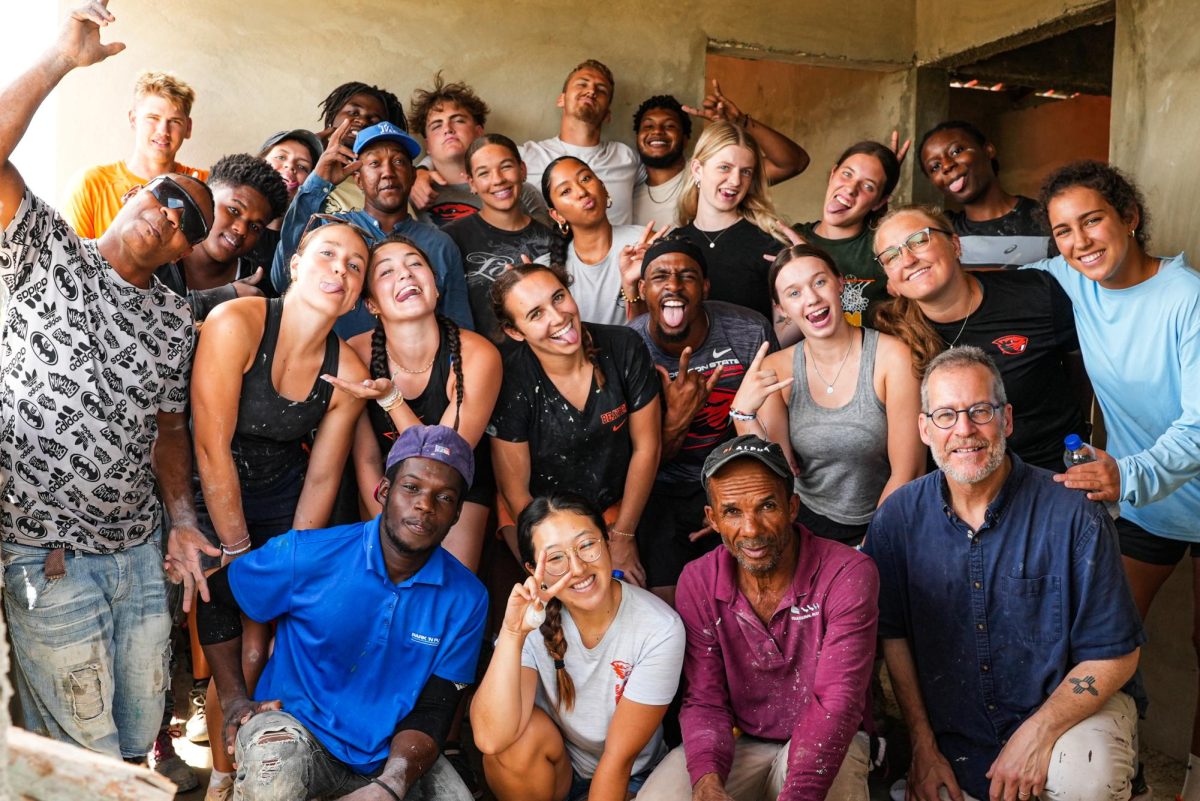
I was one in a group of 17 students and staff who made this experience far more than I had expected when I started out.
Each person brought something unique to the table, and together, we formed a tight-knit unit bonded by purpose. Among us were two key figures: David Bernell, the Political Science professor leading the program, and Nya Buckner, Director of Student-Athlete Development, both of whom played integral roles in shaping the heart and direction of our program.
Since its inception in 2011, the Beavers Without Borders program has been a cornerstone of the student athlete development program. OSU athletes train year-round and miss out on various study abroad opportunities than non-athlete students get to participate in.
In an effort to supplement those missed opportunities, as well as serve our mission of providing inclusive holistic student-athlete centered support, Beavers Without Borders was formed.
During my own time at OSU as an athlete, getting to participate in this program was the ultimate goal. Those who were selected were at the pinnacle of their student athlete experience. Beautiful destinations paired with meaningful service has been the dream of many Beaver athletes.
Over the course of the entire program, from selection to fundraising, to the week abroad, the athletes dive in head first, meeting regularly as a team to learn about the culture they’ll be experiencing and cold calling long lists of donors and past participants.
They immediately take ownership of the program as the outcomes are real and tangible. The fruits of their labor come to life as we watch the “money raised” total climb higher and higher.
Once we arrived at our destination, we see the immediate impact of building something new, something that will change the lives of dozens of kids for years to come.
Every year, a new group of athletes participate in the program with a new destination and a new project; however, the outcomes are always the same.
They return from their trip different people, better people than when they left. And I am both fortunate and humbled to bear witness to it all.
Our journey began as we landed in the Dominican Republic and immediately set out for San Pedro de Macorís, a city roughly an hour away from the airport.
The drive into the city instantly reminded me of Roatán, Honduras – both beautiful and deeply affected by poverty.
The disparities between what we often take for granted in the United States and the living conditions in the Dominican Republic were stark and emotional. It is something that hits me each time I travel to a region like this: the resilience of communities in the face of such challenges is nothing short of humbling.
Our destination was an orphanage tucked into a part of town that, truthfully, felt a little intimidating at first glance.
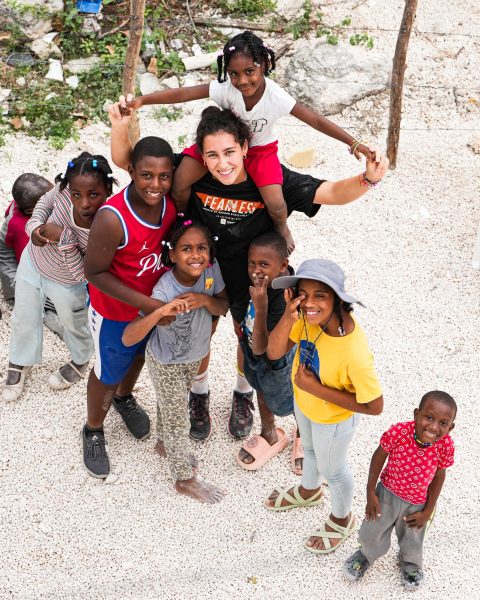
The people at El Centro Desarrollo Integral Para La Niñez Enmanuel, home to around 30 kids from the community, welcomed us with love, warmth, curiosity, and endless patience to make every language barrier feel smaller.
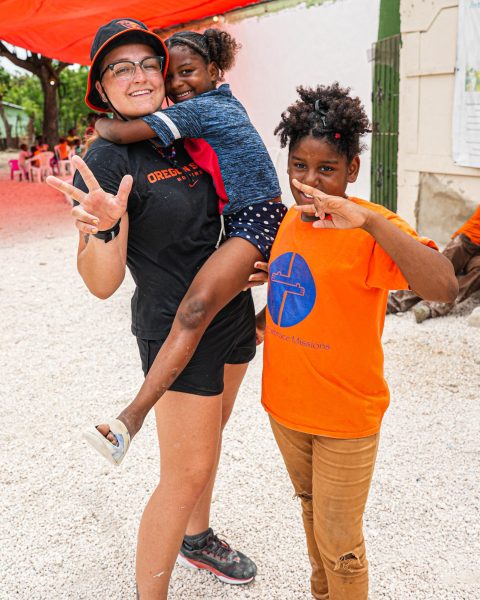
Most of the children did not speak English, but their knack for reading body language, facial expressions, and emotions made communication feel natural. I lost track of how many times I said “¿Cómo te llamas?” or “¿Por qué?”, and every time, they smiled and helped me along.
What stood out most was how forgiving and open-hearted they were toward us. Despite our sometimes-broken Spanish, they never grew frustrated. They simply wanted connection, and we gave that to each other in full.
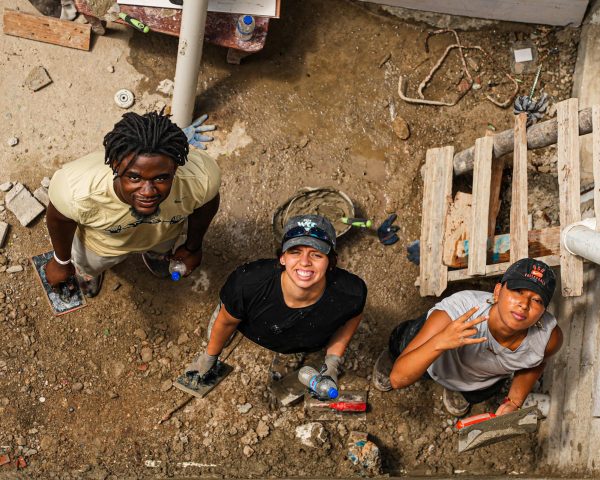
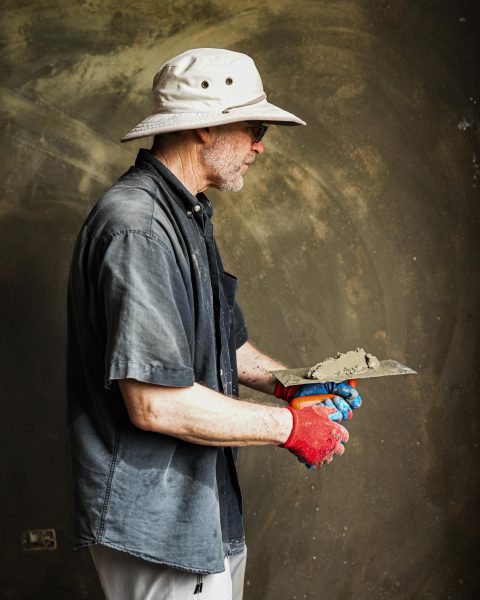
Our days were physically demanding but incredibly rewarding. The main goal was to mix and apply concrete to the interior walls of the new floor at the orphanage building. (In the previous year, the Beavers put up the walls, one cinder block at a time.).
The process was labor-intensive. First, we sifted sand—bucket after bucket—then combined it with cement and water. All by hand, with nothing but shovels and sweat. That part alone left me sore beyond belief, but proud of what we accomplished.
The construction site was a coordinated dance of teamwork: six people working on the ground sifting sand, others hauling water from a well, a pulley system lifting buckets to the third floor, and still more on the upper floor applying the mix to strengthen and finish the walls.
I spent much of my time helping Emanuel, the head of the construction project, and Juan, another construction worker, drawing water from an eight-foot-deep well across the orphanage courtyard. These men were tireless, and their gratitude toward us was profound.
To them, our presence was more than just physical help…it was a blessing. Because of our group’s fundraising and labor from the year before, the children at this orphanage were provided a new level of almost-finished rooms, plus beds for the existing rooms and a whole range of other things we might consider as a given, but at the orphanage were major milestones: a refrigerator and freezer, a big stove, a washing machine, fans, an air conditioning unit, Wi-Fi, and a computer.
Our task was to continue the work of adding a new floor and make it livable for another 30 kids. That knowledge made every aching muscle worth it.
The most emotionally intense moment came on our final evening. I had expected the goodbyes to be tough, but I was unprepared for the depth of the connection I had made, particularly with one child.
I had not seen her much that day, but as the evening unfolded, she found me, and once she was in my arms, she did not want to be put down. Every time I tried, she would look up and softly ask to be held again. When she finally spoke, I turned to others for help with translation. “She says she loves you,” they told me. I broke down into tears right then.
That moment sealed it for me, this was not just a trip, it was something life changing.
The hardest part was not just saying goodbye. It was knowing that the work is not finished yet.
There is still $18,000 needed to complete the floors, tile, bathrooms, ceilings, paint, doors, and bunks. But there is also hope. There is the plan for June 2026 – to return to the same location and continue what we started. The idea of coming back, of seeing these same faces and finishing the job, fills me with joy and purpose.
One thing I will never forget is that the people there did not want us to return just because we were helping or bringing funds. They wanted us back because we built something deeper – community, trust, love. And they gave just as much to us as we gave to them.
In San Pedro de Macorís, I found something unexpected: a second home. A place where I was welcomed with open arms and left a piece of my heart behind. No words can ever truly capture the love I now carry for that village, for those children, and for the team I traveled with.
I went there to help construct a building, but what I helped build instead was something stronger—connection, compassion, and purpose. And I know in my heart I will be back.
If you are an Oregon State student and reading this thinking, “I want to do something like this,” you absolutely can.
Beavers Without Borders (BWOB) is a service-based travel program that gives OSU student athletes the opportunity to make meaningful impacts abroad while growing personally and academically.
The projects span multiple countries and involve hands-on service, cultural immersion, and deep reflection.
Here is how you can take the first step, as explained by Bernell and Buckner:
- Student-Athletes: Keep an eye on communications from OSU Athletics or reach out directly to Michael Rutledge or Nya Buckner, who coordinate BWOB participation through Student-Athlete Development.
- Other OSU Students: There are numerous study-abroad programs offered by departments throughout the university. Check with OSU Global Opportunities (OSU-GO). Go to the OSU-GO website, look for opportunities on social media, and talk to your academic advisor about study abroad, service-learning, and experiential learning programs.
- Funding Your Trip: This takes some planning. Athletes in BWOB have targeted fundraising on Dam Proud Day, and they ask previous participants for financial support. Many study abroad participants throughout OSU receive support through scholarship programs. In addition, financial aid can also be used for study abroad.
- Start Early: Trips typically happen over summer or spring break, and applications open early in the academic year. Planning ahead will give you a better chance of making everything come together.
No matter your major, whether you’re an athlete or not, or just someone with a heart for service, there is a place for you in programs like this.
And trust me: once you go, your life will never be the same.