The Memorial Union: white. The grass: green. The MU quad: multi-colored with chalk messages spread around. Meanwhile, a blue and red tent seemingly brings uncomfortable looks from those passing by.
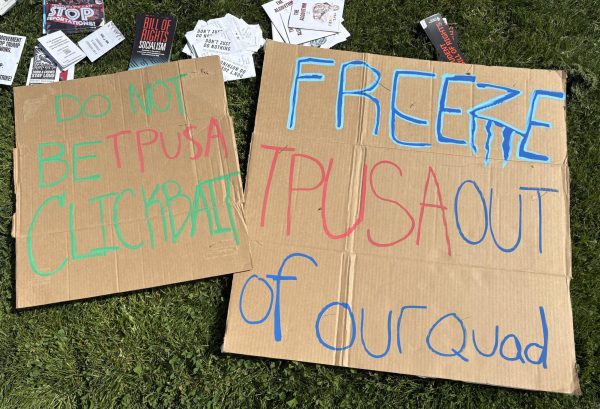
This could be used to describe the MU quad on April 13, 2026, as Turning Point USA’s Cascades branch opened up a space for students to ask questions on the Oregon State University campus.
The organization brought in Chloe Cole, a detransitioned activist who speaks out against transgender affirming care, to discuss the ideas surrounding transgender rights with students in an open-mic, question-and-answer session.
The air was alive with voices. Voices opposing the organization and voices in support of it. It began stirring questions in me about how love is best lived out in situations like this.
How do we experience the diversity of community without shaming one another?
The answers to these questions are beyond the scope of this one event, but in my curiosity, I began to talk to some of those present to better understand the intricate interactions of these parts of our campus community.
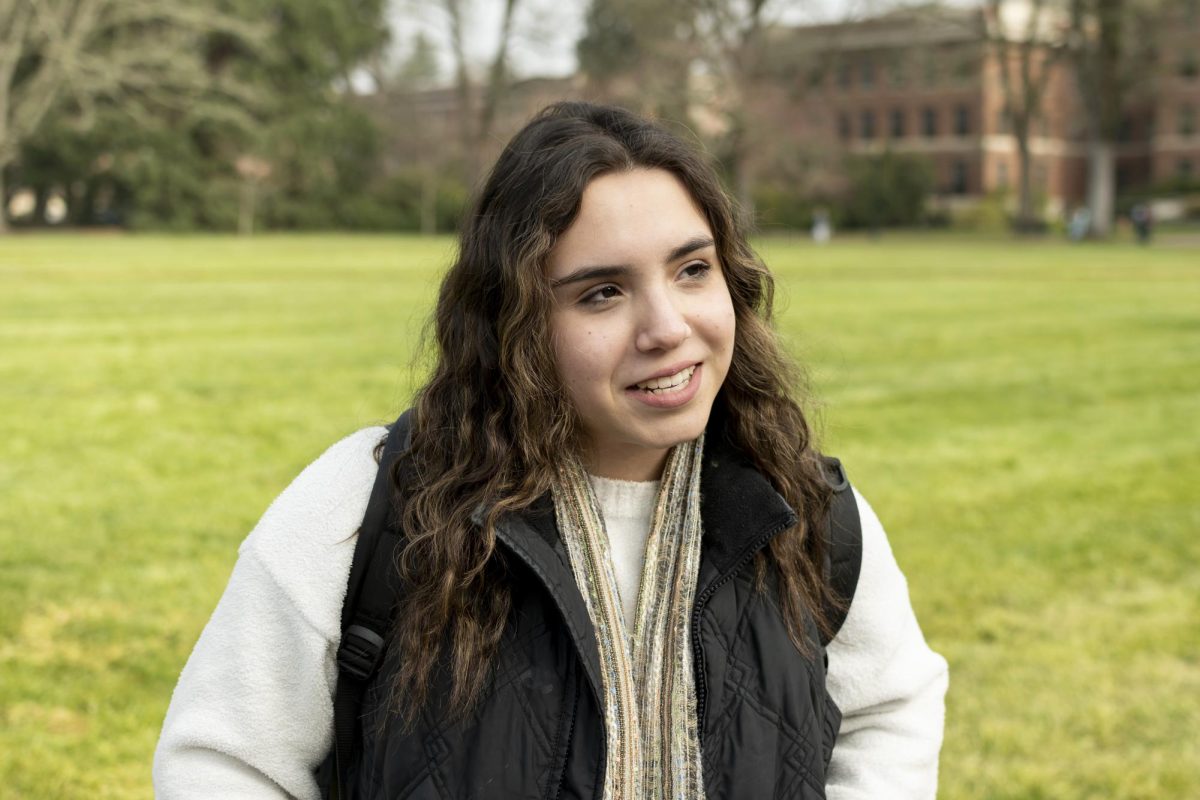
Gwendolyn Janik is a Linn-Benton Community College student who has been with the Oregon State University TPUSA club for the last two years and served as vice president last year.
Janik described how they loved getting to be at these events because of the way people are so open to talking and sharing.
“It’s just been great to be able to connect with people,” Janik said, “learn new perspectives, be convinced on certain topics, but also convince others on different ones, and just have open conversations.”
I stood with the TPUSA group for a while, listening to the team prepare for the discussion, and then watched them as their team members helped begin the talking.
The group communicated that they really wanted to invite open dialogue and have hard conversations within the campus community.
While all of that was taking place in the MU quad, the Student Experience Center Plaza had its own bustle happening.
Nested among other tabling groups, the Pride Center had a table open, providing a place for conversations, support, and resources.
I noticed this group sat, not engaging with the TPUSA discussion, almost as a testament to their own beliefs amidst the movement of the event. They spoke out in a way that did not warrant interaction in the way TPUSA might have wanted.
I could see feelings such as disgust, distrust, and anger emanating from different people passing through the area. Again, I began to wonder. Amidst the mess of it all, where is love?
“I come from an area that is very much hateful towards trans people,” said Bax De Witt, a first-year chemistry major. “And so I want to help build an inclusive space anywhere I am for people to feel safe, to come as they are, because I feel like that should just be accessible anywhere, for anyone, and unfortunately, it isn’t.”
De Witt was a student sitting next to the Pride Center table, holding a sign that said, “Trans lives are beautiful.”
They described the hateful energy that they felt in their hometown and the way the politics encouraged fear in people, making some feel their transgender identity might make them illegal or force them to flee.
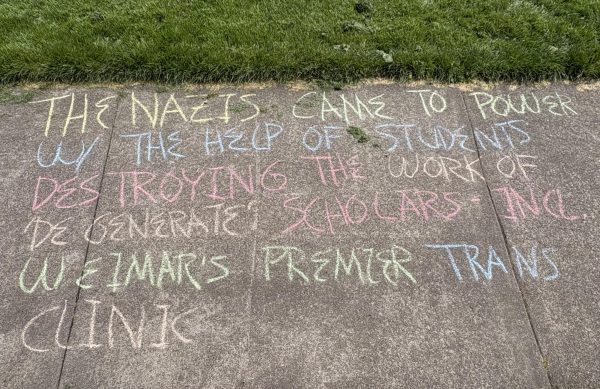
All along the intersecting sidewalks of the quad, chalk was being put to use as a group of people, including Lincoln Worley, a student in their third-year of a nuclear engineering master’s degree, began sharing their own message.
Worley was also not actively engaging in the question-and-answer session that TPUSA set up, partly because they felt the organization would skew any dialogue they had in the discussion.
“Because I can’t stop that from happening, I am chalking messages that I would otherwise need to go up and talk to them on camera for,” Worley said.
“I do like a good argument, and I agree that public speech and debate is a significant part of a functioning democracy. However, I do not believe these people are acting in remotely good faith.”
Worley said that TPUSA had reserved all of the space in the MU quad.
Seeing this as a way to discourage discourse that can’t be controlled, Worley and a few other people used chalk to spread their ideas of the organization on the ground as a way to speak out without the possibility of being controlled or manipulated by anyone.
“I’m just here to try and put friction in, to try and shake the screen a little bit, that metaphorical screen that bystanders who maybe haven’t already made up their minds are seeing TPUSA through,” Worley said.
In these discussions, I saw many perspectives being brought before me, and I soon began to feel lost in the voices. But even in this noise, I noticed a general trend of anger towards TPUSA and what they stood for.
It made me uncomfortable to hear the anger welling from the people around me, but it made me even more uncomfortable to hear the reasons for their anger.
Multiple experiences I had seen seemed to point to TPUSA in neglecting, disregarding, shaming, and intolerating the valuable existence of transgender people.
These people are important, and the hate that pushes against their value does not seem beneficial to walking forward with love.
Every person I heard seemed to want to have some form of discussion. Whether it be calm and one-on-one or as part of the question-and-answer discussion format. If only we could embrace the people around us in a way that speaks to human value, no matter what others’ beliefs and values may be.
If that were to happen, maybe then we can have the safe discourse I heard everyone longing for.
Who knows? Maybe then we can begin to see love.