Editors note: This opinion-piece does not represent the opinion of Beaver’s Digest but rather it reflects the personal opinions and observations of the writer
“If you don’t want a house built, hide the nails and wood. If you don’t want a man unhappy politically, don’t give him two sides to a question to worry him; give him one. Better yet, give him none.”
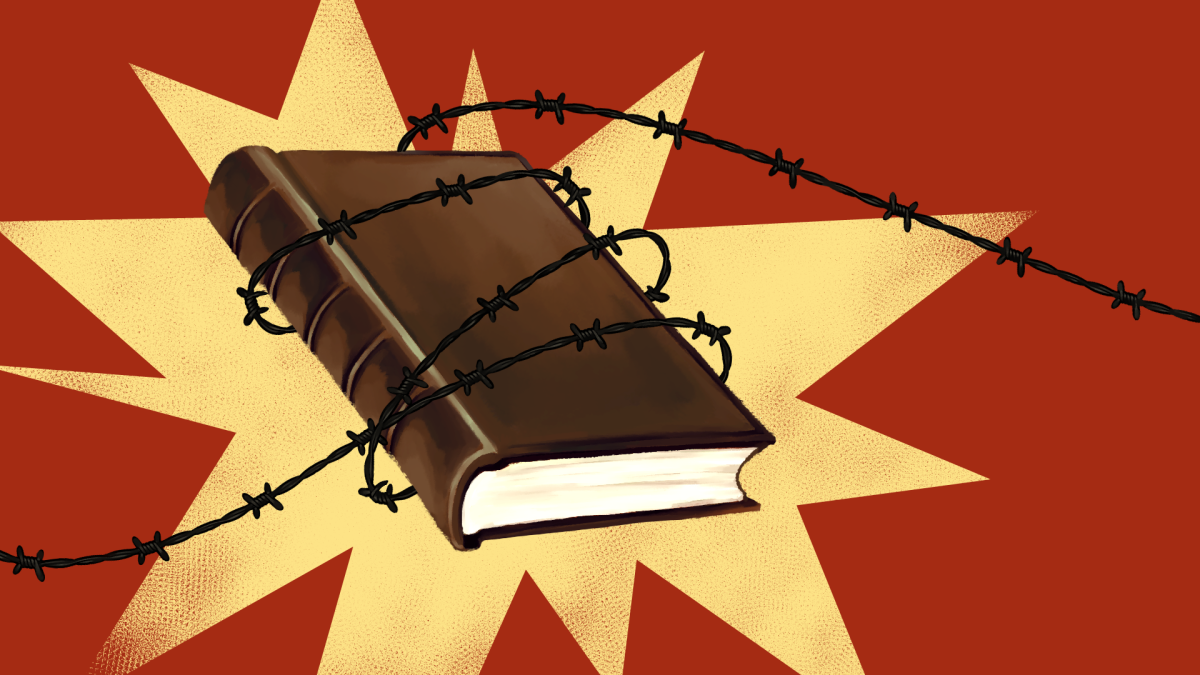
This popular quote from Ray Bradbury’s famous, and banned novel Fahrenheit 451 is prevalent now more than ever as books continue to get banned from libraries and school curriculum each year.
The irony of this book being banned is not lost to many, the book’s central theme is rooted in why banning books makes for a grim society. With the book having depictions of drug use, sex, profanity, violence, and its main focus, anti-censorship. Since Fahrenheit 451 contains so many controversial topics, it is often used as the poster child for banned book discussions.
According to PEN (Poets, Essayists, Novelists) America, a non-profit organization that works to defend free speech for writers and readers in America, there have been 22,810 books banned since 2021. With 6,870 of those bannings occurring just in the 2024-2025 school year.
Before a book gets outright banned, it must first get ‘challenged’, which means a person or group of persons make a written complaint with the library or school, listing their reasonings on why the book should be taken out of shelves or the school’s curriculum.
Studies by the American Library Association, or ALA, show that 32% of book challenges come from parents, while the second most challenges come from school boards and administrations.
Often these challenges stem from the impulse to protect children from “explicit content”, as heroic as protecting children is, that is not what’s occurring. The issue arises when you ask: But what exactly is explicit content? And who gets to decide when someone is mature enough to be exposed to said content?
The most frequent grievances listed when formal challenges are made, are that they are unsuited to any age group, include sexual content and use offensive language. But in reality the books targeted often feature queer individuals, people of color, unique political views, and many more diverse and usually non-conformative view points. With such vague concepts of explicit content it allows for marginalized and unique books and authors to be more easily targeted, using the veil of protecting children to hide discriminatory actions and ideals.
Some of the most famous banned books include, The Bluest Eye by Toni Morrison, The Handmaid’s Tale by Margaret Atwood, The Perks of being a Wallflower by Stephan Chbosky, Gender Queer: A memoir by Maia Kobabe, and even the popular children’s book series Harry Potter by J.K Rowling.
And yes, most of these books depict experiences with racism, homophobia, transphobia, sexual content and mental health issues. But through that, these books also allow the readers to be more aware of the world around them, gaining new knowledge about experiences they may have never been aware of before cracking open the book.
Of course there are differing opinions on what certain age groups should consume when it comes to books, but those opinions should be up for individuals to make and should not be forced upon the public, as each reader’s journey and maturity level is unique to oneself.
Even with the more mature content previously mentioned and that many other books may feature, one individual or group of individuals should not hold the power to limit knowledge to the masses.
With the current political conflicts growing more polarizing by the day, it also grows equally important for individuals to be as aware as possible about the world around them. According to The psychology of censorship by Jennifer M. Kinsley, the rise of censorship prevents the general population, especially youth, from gaining critical thinking skills and having deeper thought into content and politics.
As previously mentioned, drawing from the themes of Ray Bradbury’s ever relevant novel, taking away the options and resources of the common person allows for a less educated voting citizenry, which then leaves space for those in power to take advantage of their citizens and their needs.
For more information on banned books, challenging, and what you can do about it you can learn more at ALA’s website, along with the Banned Books Week Collection to learn more about organizations that fight against censorship.