

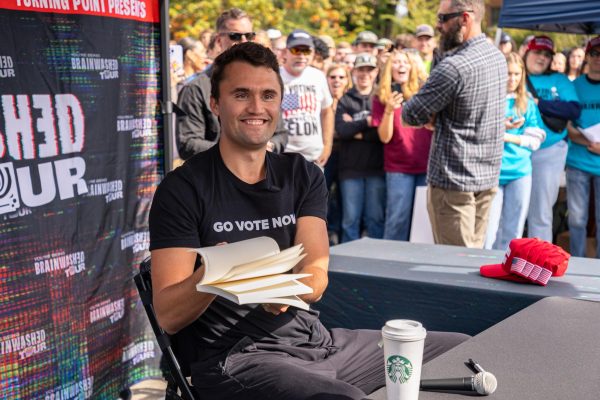
On Sept. 10, 2025, Charlie Kirk, American right-wing political activist, was shot and killed at Utah Valley University in Orem, Utah. Kirk was visiting Utah Valley as part of his first stop of the “American Comeback Tour”.
This assassination shocked college campuses nationwide, bringing to attention a critical question: how do universities protect free speech and safety simultaneously, without turning campuses into fortress zones?
With Oregon State University having hosted speakers such as Charlie Kirk and Margaret Atwood in the past, it highlighted security concerns regarding both audience and speaker safety. Atwood chose to meet virtually due to safety concerns for the audience.
These national debates don’t just play out in headlines; they shape the daily lives of students on campuses like OSU.
For some, like Caleb Croshaw, a 27-year-old transfer student and current member of Turning Point USA Corvallis, the importance of keeping open dialogue and discourse alive in campus communities has become more apparent.
Croshaw came to Oregon State as a transfer student, not knowing many people, but he felt that he wanted to join a community with similar conservative views to his own. He wanted to find like-minded people with whom he could share his opinions.
“On college campuses, there’s a lot of voices on the left, and so we want to counteract that and say, ‘A, if you are a conservative, you belong here also. And if you’re not, then we can, and should, have respectful conversations about our ideas,” said Croshaw.
Croshaw explained that TPUSA Corvallis’ main objective is to inform and persuade, but also allow for respectful discourse over a difference in political views.
He feels that since Kirk’s assassination, there is more of a magnetic pull to have the tough conversations on campus and push for more events.
“I think there’s a stronger feeling of we have to do it now in terms of going out there and having the conversations,” said Croshaw.
When asked how he feels universities should balance ensuring safety during these events, while also protecting free speech, Croshaw went on to explain that OSU does a good job of allowing these events to take place on campus.
“I think the university should encourage both sides of that political aisle to have their voices be heard,” Croshaw said.
However, with these political events being held and speakers from both parties coming in, it raises concern about the level of security that the university should be implementing.
Croshaw says he believes that there tends to be an increase in security when the right leaning individuals are hosting events, and he states that he thinks this is due to the fact that the left’s response to these events is violence and warrants more security.
“I think that we can say that it doesn’t look good, and I would agree, generally, that having snipers on the roof to make sure that there’s protection and having huge levels of security, it’s not a great look, obviously, but I think we’re also kind of past the point of that conversation when you reach a point where conservatives like Charlie Kirk go to campuses and get assassinated in cold blood,” said Croshaw.
While students such as Croshaw experience these tensions up close, faculty and administrators face the challenge of balancing safety with the university’s educational mission.
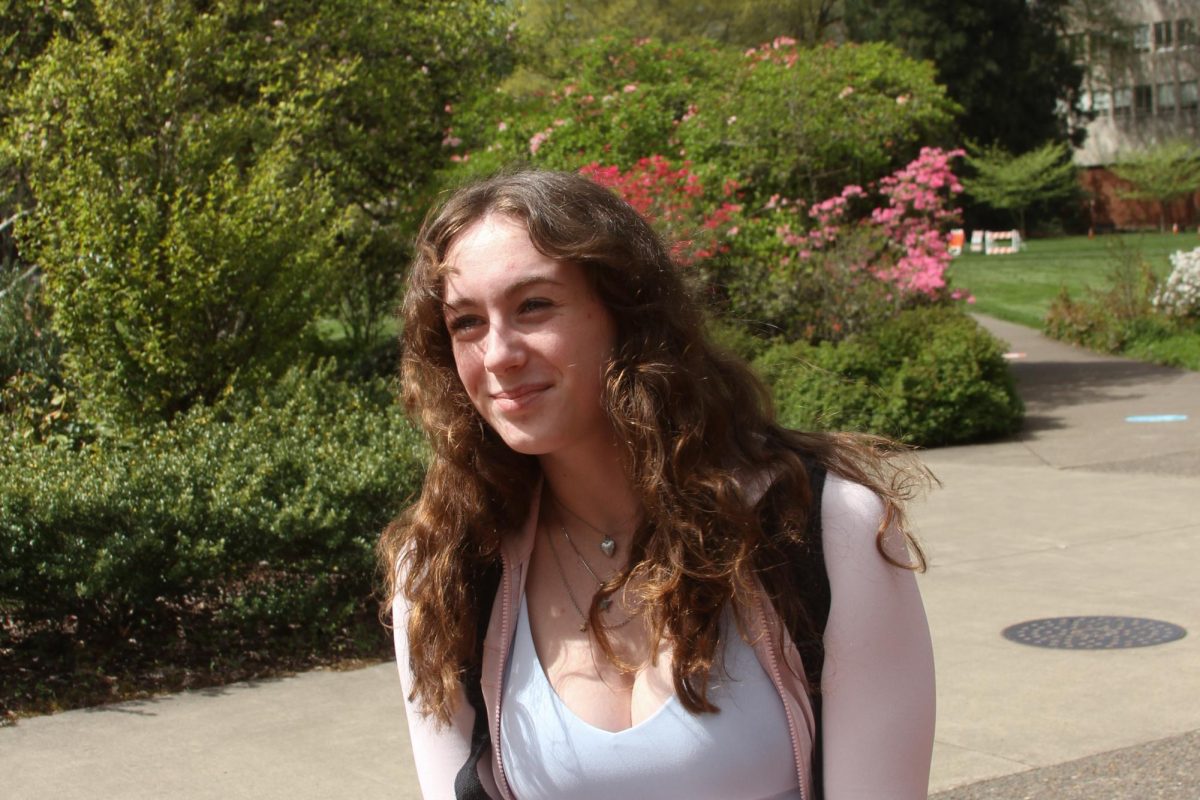
OSU political science professor Erika Wolters says that constructive disagreement is not only necessary but fundamental to higher education.
Wolters highlighted the importance of engaging in civil discourse in the classroom because it reflects how individuals will treat each other outside of the classroom.
“To have free speech, it means that somebody can say something that you are diametrically opposed to, that you don’t like, that you feel is immoral, or any of those things, but they still have the right to say it,” said Wolters.
She introduces the idea that once free speech crosses the line to pushing for violence or inciting harm on someone else, it should not be constituted as free speechIn today’s world, these conversations don’t stay confined to campuses; they often spill onto social media, where the boundaries of “free speech” become more of a blur.
“I think that, with social media, we have created platforms and where people do have this feeling of that free expression, that they can say whatever they want and however they want,” said Wolters.
“While sometimes that could be freeing for some people who don’t feel they have the voice, I think at other times it can be very jarring and it could be sort of under this guise of anonymity. So, it’s less about them engaging in some sort of constructive dialogue and more just promoting an agenda.”
The ideas that both perspectives share of a shared discourse, Croshaw with stronger dialogue and Wolter’s emphasis on respect in the classroom reveal some of the challenges universities are facing.
Students want to be able to express themselves without the added fear, while universities want to take that fear away and replace it with a safe environment.
“One of our top jobs is to teach, especially out of the College of Liberal Arts, is to teach how to be critical thinkers, and it’s really hard to do that if we’re not allowing for different ideas and different viewpoints to be discussed,” said Wolters.







Elise Delamarter • Nov 8, 2025 at 6:06 pm
Wow, this story is extremely refreshing! I know that so many in the silent majority can relate to Crowshaw, and I thank the writer for touching on a topic that is not only relevant but also offers the opportunity to show people a different perspective they may have never considered.