Canvas notifications buzz like a second job.
Professor feedback comes in the form of online comments that are nearly impossible to find and reading arrives in Portable Document Format (PDF) that most students just CTRL F.
So, whether it’s online classes or in-person, what are we losing as college becomes more digital, or instead, what are we gaining?
With the Canvas shutdown that occurred on Oct. 20, 2025, students were blocked from accessing the platform that holds their assignments and grades, millions of students across the nation were affected, including Oregon State University first-year student Katelynn Whalen.
“There’s also something to be said about over reliance on technology, like with the Canvas crash, a lot of the classes were just kind of struggling to do anything because they were digitized, I would argue too much,” she said.
The crash of the online tool required by many universities, put a lot of things into perspective. For many classes, Canvas Announcements is the main way of communication between students and professors.
Whalen isn’t the only person that is concerned with the reliance on digital tools in college.
Evan Gottlieb, a professor in the School of Writing, Literature, and Film at OSU since 2003, shares his experience with the rise of technology on campus.
“The sense of community is really lost,” said Gottlieb.
He admits that the growing loss of connection among students and instructors frustrates him.
A lot of the active learning and class discussion that he and other professors value are now being replaced by quick answers from artificial intelligence (AI) tools like ChatGPT.
Gottlieb is actively figuring out what methods to use to get back a sense of community in his classes.
“I think that my decision to try experimenting with no laptops and those smartphones out during class is actually related to the ubiquity of the really sort of rapid ubiquity of ChatGPT.”
While some professors like Gottlieb are quickly attempting to get a hold on the rise of digital technology in classes, others are letting it play out more.
Librarian and AI literacy director Laurie Bridgers has her own perspective.
When confronted with the common belief shared by many professors, including Professor Gottlieb that handwritten notes improve memory, Bridgers sees things differently.
“I am not convinced that writing things down helps people remember, and part of that comes from the fact that I have a son with dyslexia,” she said, also reflecting on her own struggles with note-taking, preferring a digital way of doing it.
Bridgers, who has been teaching since 1995 and received her Masters of Library Science completely online, has an understanding of how convenient online learning can be.
But, she is not ignorant to the drawbacks of online learning.
“What I gained with the online degree is convenience and the ability to get this degree, no matter where I was, which was incredibly important. I wouldn’t be a librarian if I didn’t have that. But then what I lost was that I really need human connection and the camaraderie in class that comes from talking to people face to face,” she shares. Still, students like Whalen appreciate the little things.
“There is a certain benefit to always having access to study materials and always having access to these things and not have to carry around a lot of physical supplies,” she said.
The shift towards a more digital college experience has its benefits and drawbacks, it also reminds students and professors alike that technology is so foundational in education.
Many students like Whalen couldn’t imagine college without tools like Canvas or Beaver Hub to access grades, assignments, and degree plans.
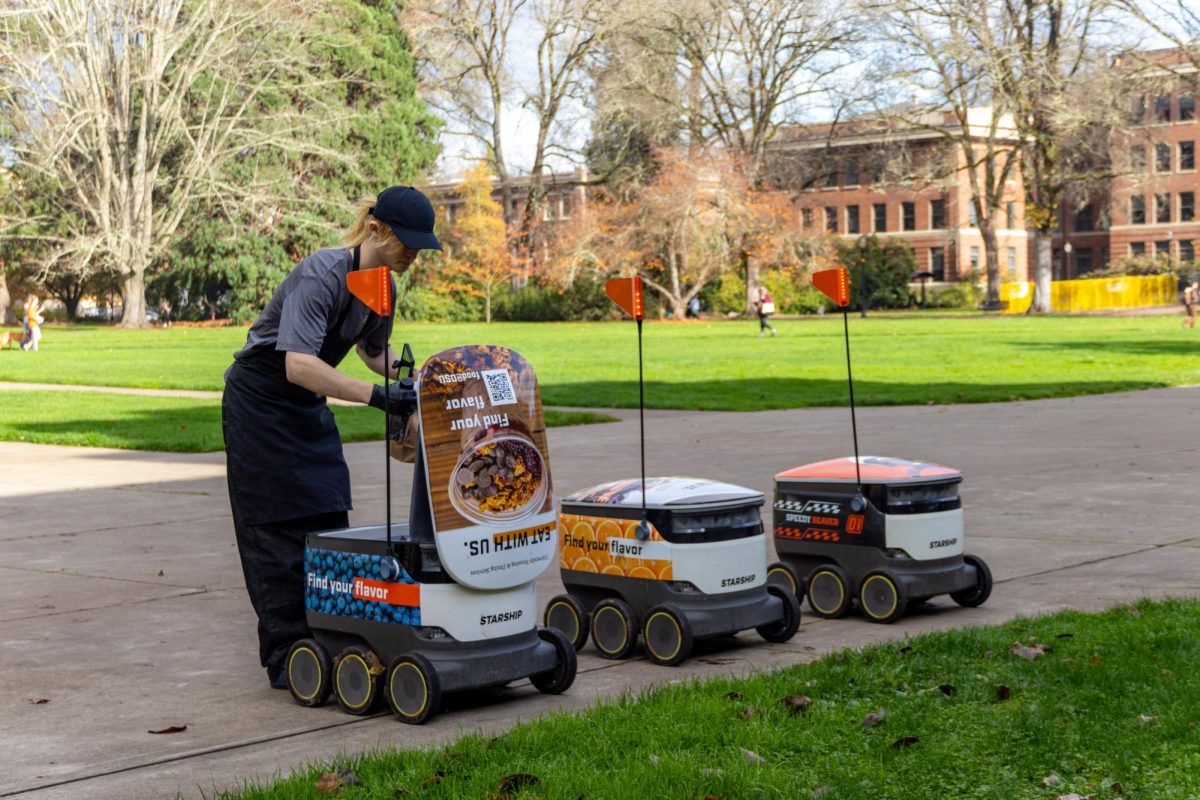
As well as the Starship Robots that deliver food to students on campus.
Even so, Bridgers poses the question:
“What is education today if we didn’t have technology?”