Iftar is a daily practice during Ramadan, typically celebrated with family or community, taking place after sundown when participants can break their fast and share a meal together.
On February 25, 2026, the Muslim Student Association (MSA) held its 6th annual Iftar event, bringing the Oregon State University community together to share both food and prayer. This year’s keynote speaker was author, social activist, and daughter of Malcolm X, Dr. Ilyasah Shabazz.
Approximately 270 attendees gathered in excitement and anticipation. Professor Sana Saboowala, a anthropology faculty member at OSU, shared her enthusiasm for the event.
“It’s amazing to see a thriving Muslim community in Corvallis,” Saboowala said. “I only moved here in December, so I was a little worried, but this is so exciting.”
Adiba Nomani, a second-year computer science major, also reflected on the significance of the gathering.
“I like that it brings everyone together, eating and breaking our fast as a community,” Nomani said. “I’m also excited for the keynote speaker and the opportunity to expand my knowledge.”
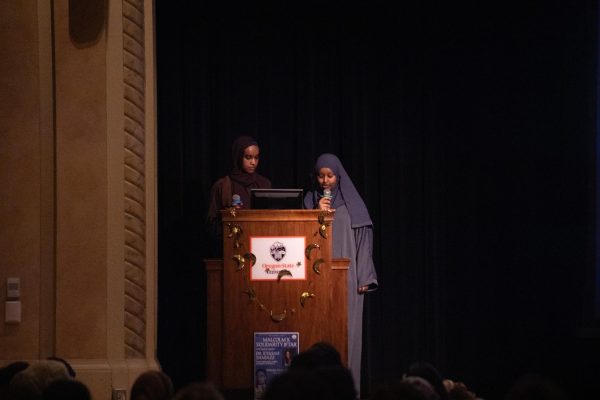
The event opened with remarks from MSA co-presidents Anisa Ali, a fourth-year bioengineering major, and Aya Ari, a fourth-year biochemistry and molecular biology major. They spoke about the legacy of Malcolm X, the importance of gathering together, and acknowledged those who are unable to celebrate Ramadan due to current world events.
Before Dr. Shabazz took the stage, President of OSU Jayathi Murthy offered her best wishes to attendees.
“I offer love and best wishes to all students… I wish everyone a Ramadan of peace, love, and solidarity,” Murthy said. She later praised the effort that went into organizing the event. “The sheer work that went into this event to pull the community together is inspiring.”
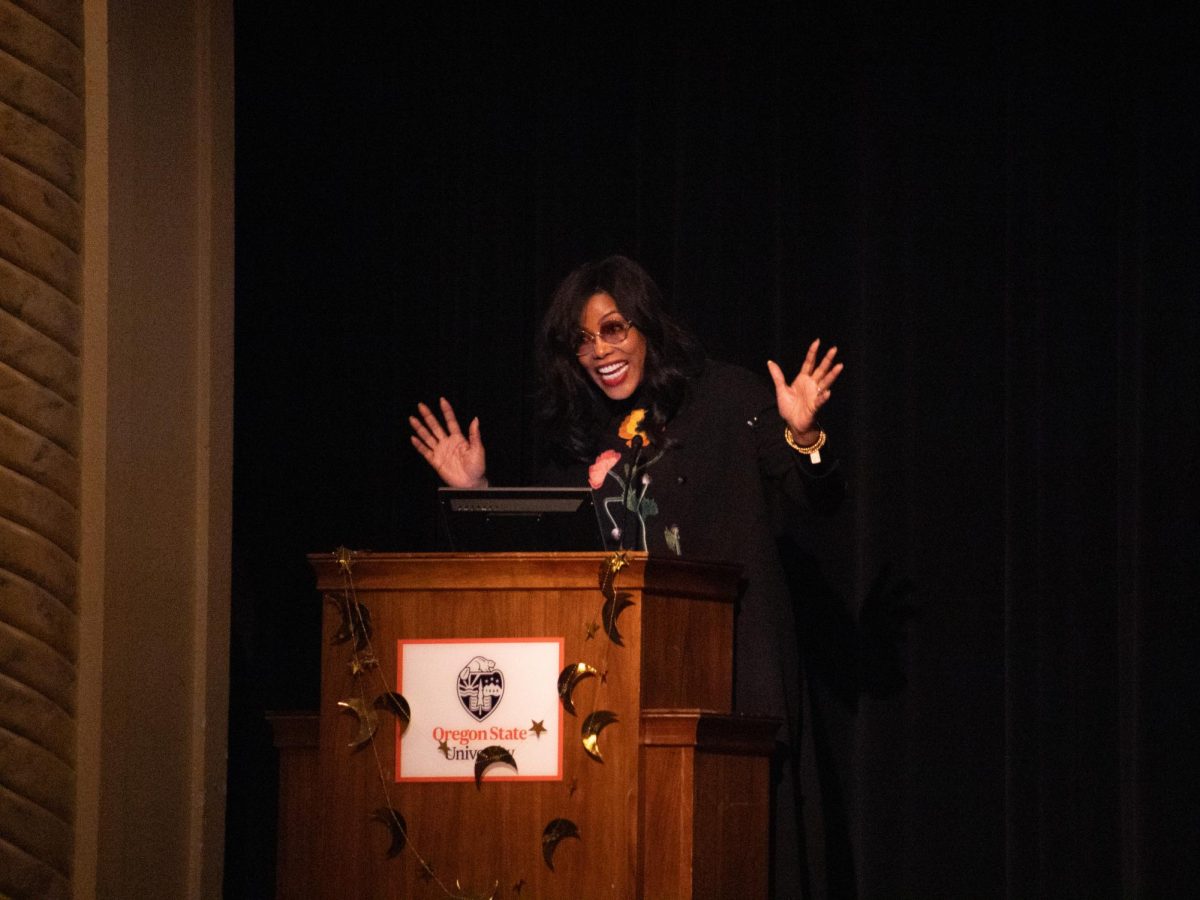
Dr. Shabazz then shared reflections on her father, Malcolm X, his activism, and the enduring power of community in the face of oppression.
“This has grown into something my father would embrace,” Dr. Shabazz said. “Faith, work, and determination can make anything possible.”
“She saw beauty in his people, he saw power in the oppressed, and he found love in our eyes… When Malcolm spoke, the world didn’t just listen, they rose,” she added.
Closing her speech, Dr. Shabazz emphasized the importance of community, education, and inclusion.
“There is no American history unless every voice is on the pages of textbooks,” she said.
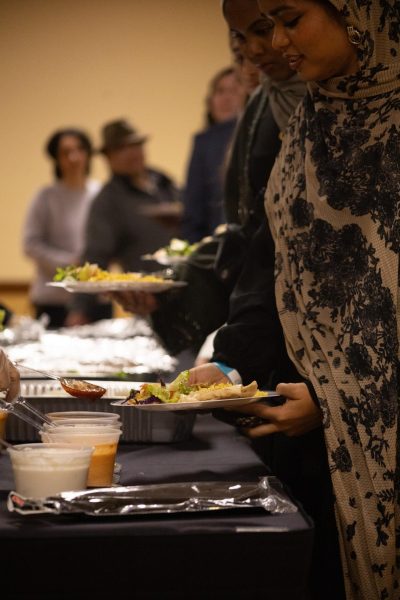
Following the speech, a prayer space was provided for those wishing to participate. Attendees then shared a meal together and engaged in conversation, culminating in a Q&A session with Dr. Shabazz.