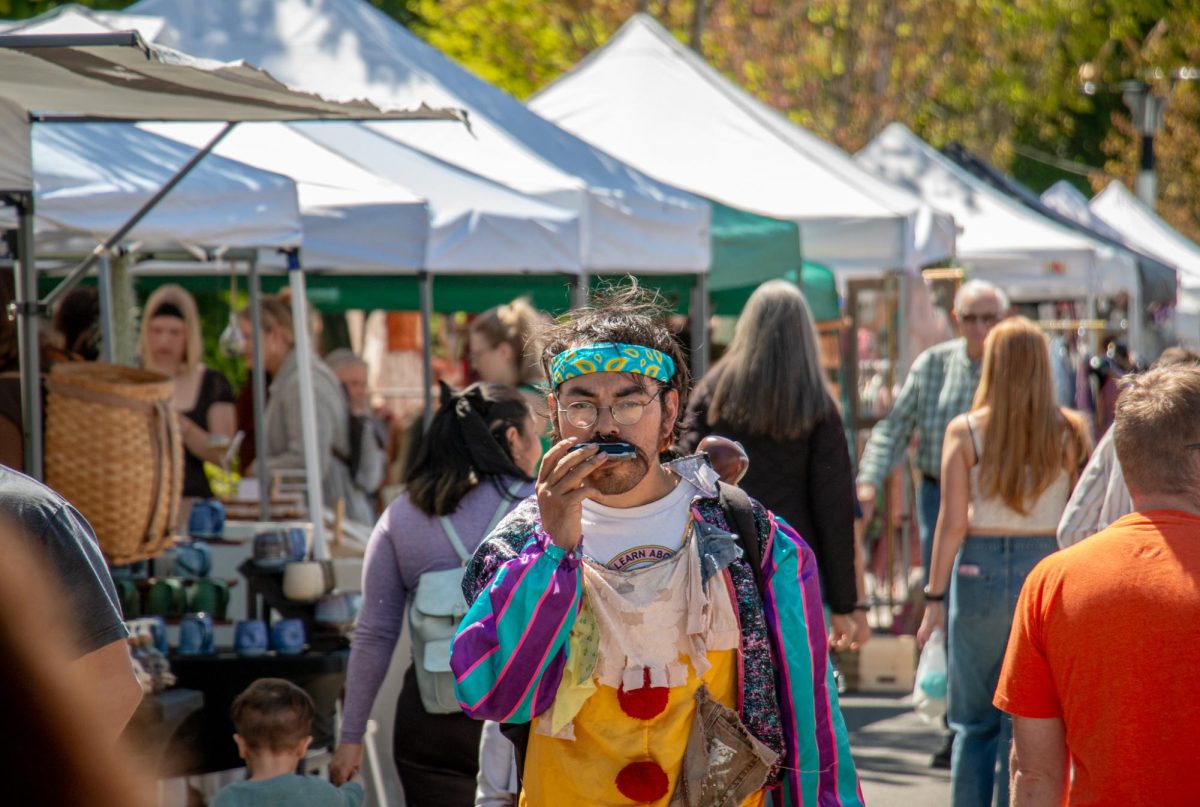
There is a saying that a picture says a thousand words, but sometimes a word recalls a thousand pictures.
Whether it be an old vine that went around a while ago, or a part of culture that lives today, Oregon State University campus goers shared the words or phrases they felt they best defined their generation.
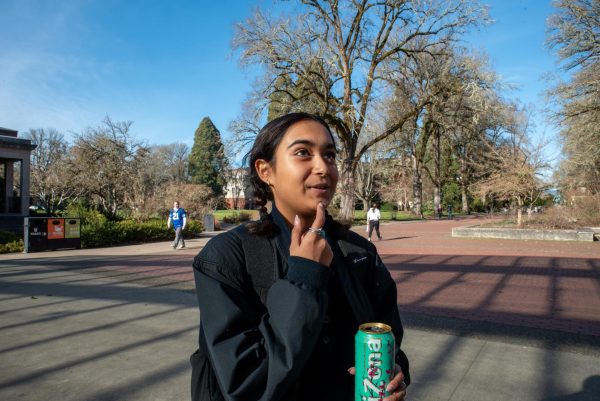
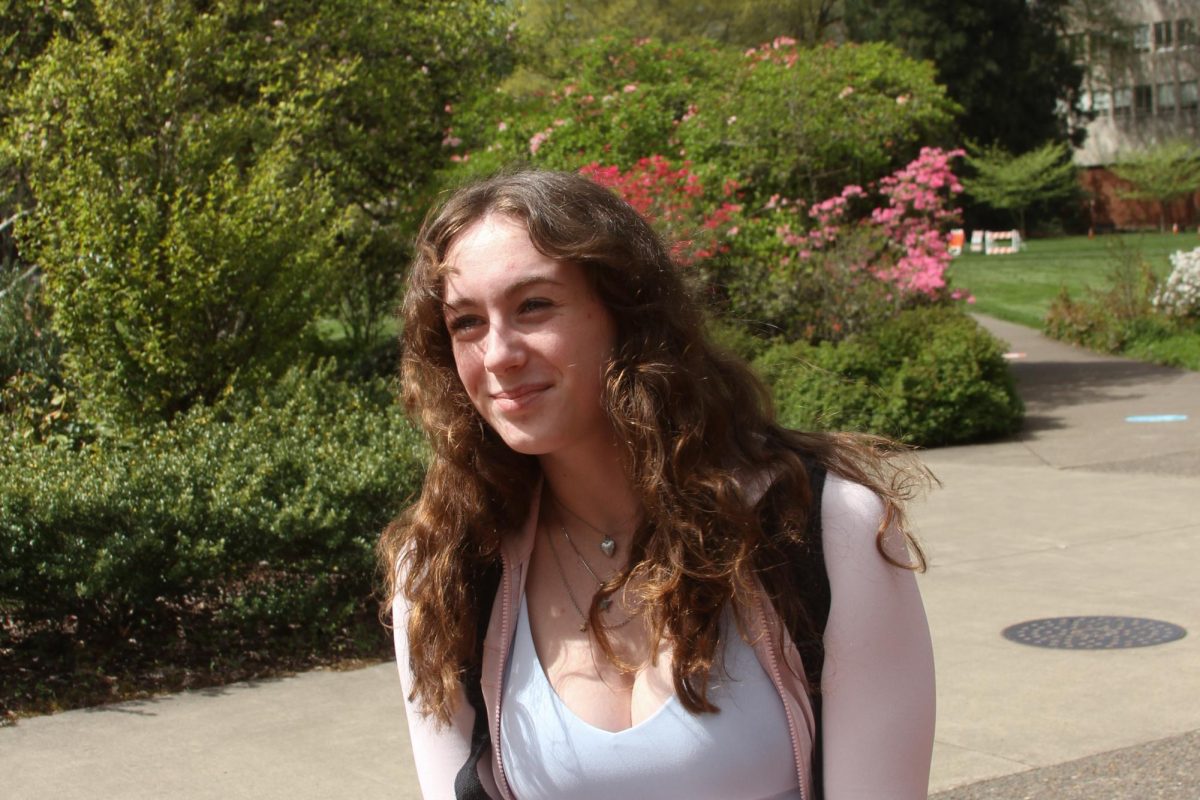
Lily Ival-oliphant, first-year biology major.
Lily Ival-oliphant, a first-year biology major, said that the words she remembers her generation using were swag and swaggy.
“I think it’s a pretty broad term. When I used to tell my mom about it, she was like, ‘yeah, that was a term we used a bit ago,’ and it just kind of resurfaced. But I think we added a new level os spice to it,” Ival-oliphant said.
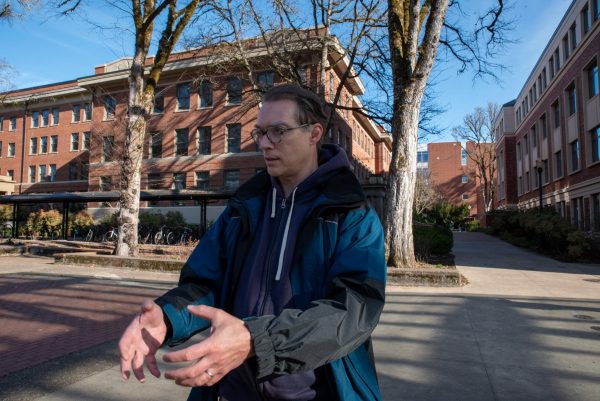
Tait Bergstrom, second year as the director of the graduate writing center
Tait Bergstrom, who is in his second year as the director of the graduate writing center, said that one of the words he remembers being used a lot was the term wicked.
“Oh, like wicked, like, wicked problem, oh yeah, I think that was originally an East Coast thing, like ‘wicked something’, and then it kind of got started getting correlated with a problem,” Bergstrom shared.
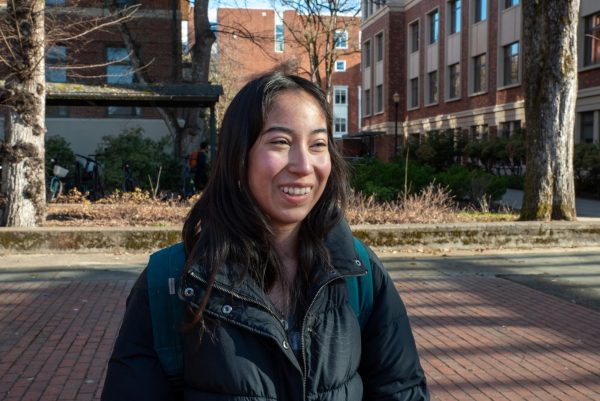
Andrea Piña, first-year pre-interior design major
Andrea Piña, a first-year pre-interior design major, said that one phrase her generation uses that especially stood out to her was the term lock in.
“I feel like everyone says it. It’s like, ‘You have to do your work,’” Piña said.

Luke Bui, second-year master’s student studying computer science.
Luke Bui, a second-year master’s student studying computer science, said that the acronym that he associates with his generation is YOLO (you only live once). Bui said that aside from the use of it in his generation, he also uses the word in computer science, as it is the name of a computer vision model, making him have a multifaceted connection to the word.
“Despite using it a lot, it just has a deeper meaning, I guess. Live like there’s no tomorrow.” Bui said.

Laura Romo, fourth-year economics major.
Laura Romo, a fourth-year economics major, said that the two words that come to her mind are cooked and chopped.
When explaining why these words came up first, Romo said, “because we’re all cooked, state of affairs, we’re all kind of doomed; chopped, because also, everyone’s kind of chopped in the state of affairs.”

Joshua Clements, third-year electrical and computer engineering major.
Josh Clements, a third-year electrical and computer engineering major, spoke about how memes have been a large part of the slang hat he used to greet and stay connected to one another.
Clements could not think of many specific memes, “I just know we have a lot of sling that we use to kind of keep us brought together,” he shared.

Oliver Russell, third-year mechanical engineering and graphic design.
Oliver Russell, a third-year student studying mechanical engineering and graphic design, talked about quoting vines and memes, especially during the global pandemic. He also noted the way specific friendgroups can share uniqueness in these shared.
“I think something that sort of affected a lot of the way we spoke was quarantine and COVID language, or Zoom language. Talking about being muted, or having your camera on, or being online, or touching grass, and things like that.” Russell shared.

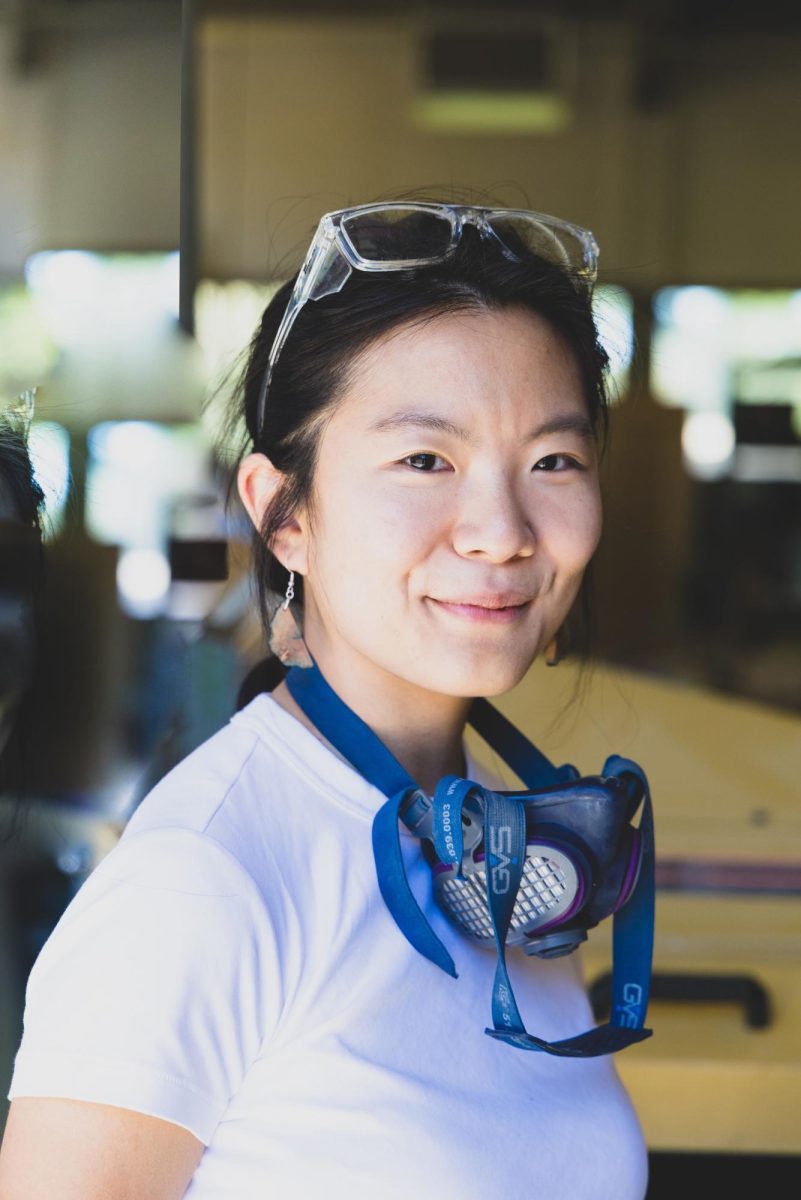
Sierra Wolfe, a second-year master’s student studying Soil Science
Sierra Wolfe, a second-year master’s student studying Soil Science, said that the word bruh was something they saw their generation using a lot. They said how they remember in highschool the way the word spread and grew to be everywhere.
“There was so much bruh. It spread to my parents, it spread to my grandparents, they would all say bruh, you know. I still say bruh today actually,” Wolfe said.